
The German labor market is facing a critical workforce shortage, with over 1.26 million positions remaining vacant. Domestic resources are no longer sufficient to meet demand, making international recruitment and experienced HR partners essential for maintaining corporate competitiveness.
- 225 000 – Deficit of skilled workers
- 1,26 mil. unfilled job vacancies
- 400 000 – required annual net migration
The shortage of skilled workers remains one of the greatest challenges for the German labor market. Although the current economic situation temporarily reduces the demand for employees in certain sectors, it does not solve the structural problem. As soon as the economy gains momentum again and the volume of orders and investments increases, the need for skilled workers will rise significantly once more.
“The current economic slowdown only temporarily conceals the shortage of skilled workers, but does not solve it.”
According to GVP data, approximately 1.26 million vacant jobs were recorded in Germany in the fourth quarter of 2025. The greatest demand persists for workers with vocational training and experience. At the same time, the DIHK Fachkräftereport 2025/2026 states that 36% of companies are unable to fill open job positions, at least partially.
In the next ten years, up to 6.7 million employees will leave the labor market due to retirement. Meanwhile, less numerous generations are entering the workforce, further exacerbating the worker shortage.
“Utilizing domestic resources alone is no longer enough to cover the shortage of skilled workers.”
In the long term, it will therefore not be possible to meet the needs of German employers solely through the domestic workforce.
Foreign Skilled Workers as Part of the Solution
For companies operating in industry, logistics, production, the automotive industry, and technical services, foreign skilled workers are becoming an increasingly vital source of labor. According to the GVP, Germany needs an annual net migration of approximately 400,000 people to maintain a sufficient labor supply in the long run.
“Acquiring skilled workers from abroad is one of the key solutions to the labor shortage on the German market.”
However, international recruitment requires experience, market knowledge, efficient processes, and quality support for workers both before starting and during employment. This is precisely where experienced HR service providers play a significant role. They help companies gain access to a wider pool of candidates, manage recruitment processes, and support the successful integration of workers into the work environment. Small and medium-sized enterprises (SMEs) in particular can thus effectively respond to labor shortages without the need to build their own extensive internal recruitment capacities.
Share of Foreign Workers
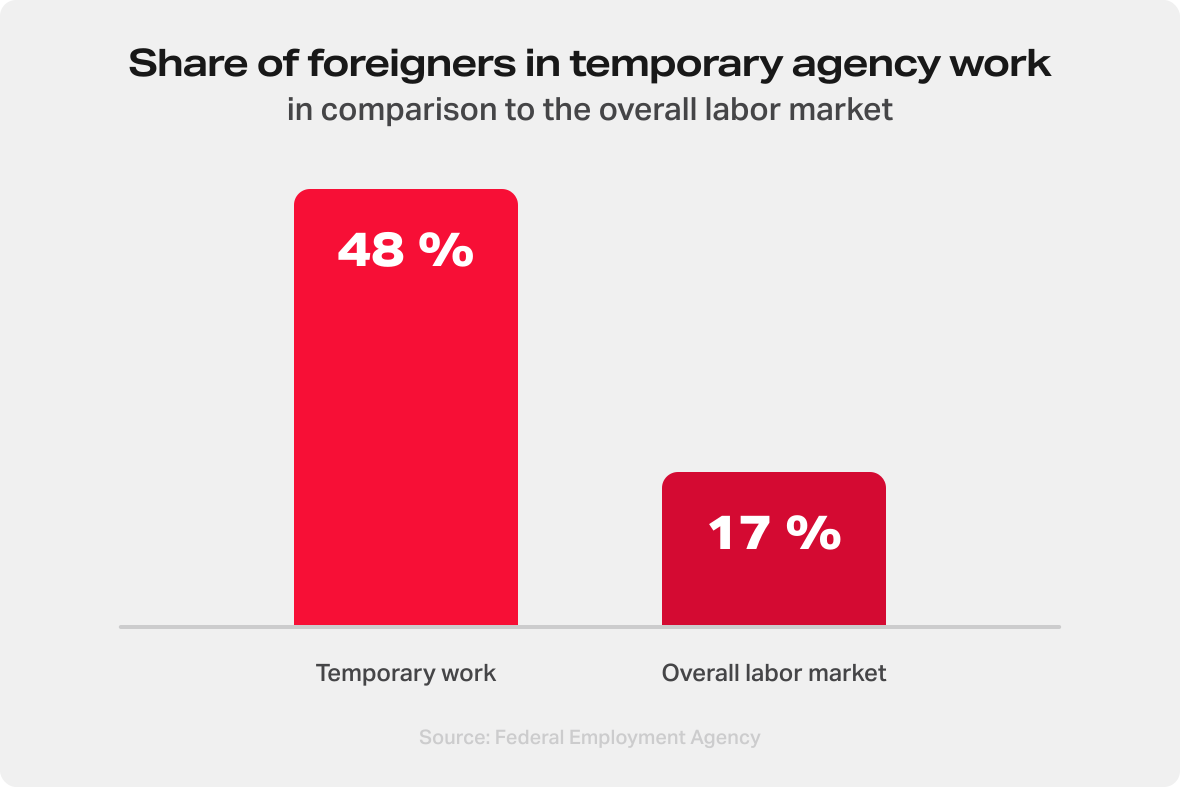
The share of foreign workers in HR services reaches approximately 48%, compared to about 17% across the entire German labor market. This substantial difference confirms the high importance of staffing agencies in integrating foreign workers into the German economy.
LUTO Group helps companies in Germany recruit skilled workers from Central and Eastern Europe. Thanks to years of experience, international recruitment, and an individual approach, we create long-term and sustainable solutions for our clients’ personnel needs.
Conclusion
The labor shortage represents a long-term risk for the growth, competitiveness, and stability of German companies. Companies that prepare for this situation in time and leverage the possibilities of international recruitment will secure a decisive competitive advantage.
Foreign skilled workers are no longer just a supplement to the labor market; they are becoming one of the key factors for the further development of the German economy.
– DIHK: Fachkräftereport 2025/2026
– GVP: Faktenblatt „Zeitarbeit & Fachkräfteeinwanderung“

